
Strategy & Ownership
Does an AI initiative have a business owner who carries the outcome, or only a sponsor who approved the budget?
- Business case per use case
- Named accountable owner
- Portfolio prioritisation method
- Board-level reporting line
↑↓ move · ⏎ open · esc close
Consulting · AI Readiness Assessment
Most enterprise AI programmes do not fail on the model. They fail on data nobody owns, integrations nobody scoped and governance nobody agreed. We assess all six of those dimensions honestly, then hand you a sequenced roadmap your board can actually fund.

Why it matters
The pattern is consistent enough to be predictable. A capable team runs a convincing pilot. Leadership approves a programme. Six months later the programme is stalled — not because the technology disappointed, but because the data it needed was owned by three departments who disagreed about its definition, and because nobody had decided what the AI was permitted to do without a human.
By then the organisation has spent a budget cycle and acquired a reputational problem: people now believe AI does not work here. The second attempt is harder to fund than the first.
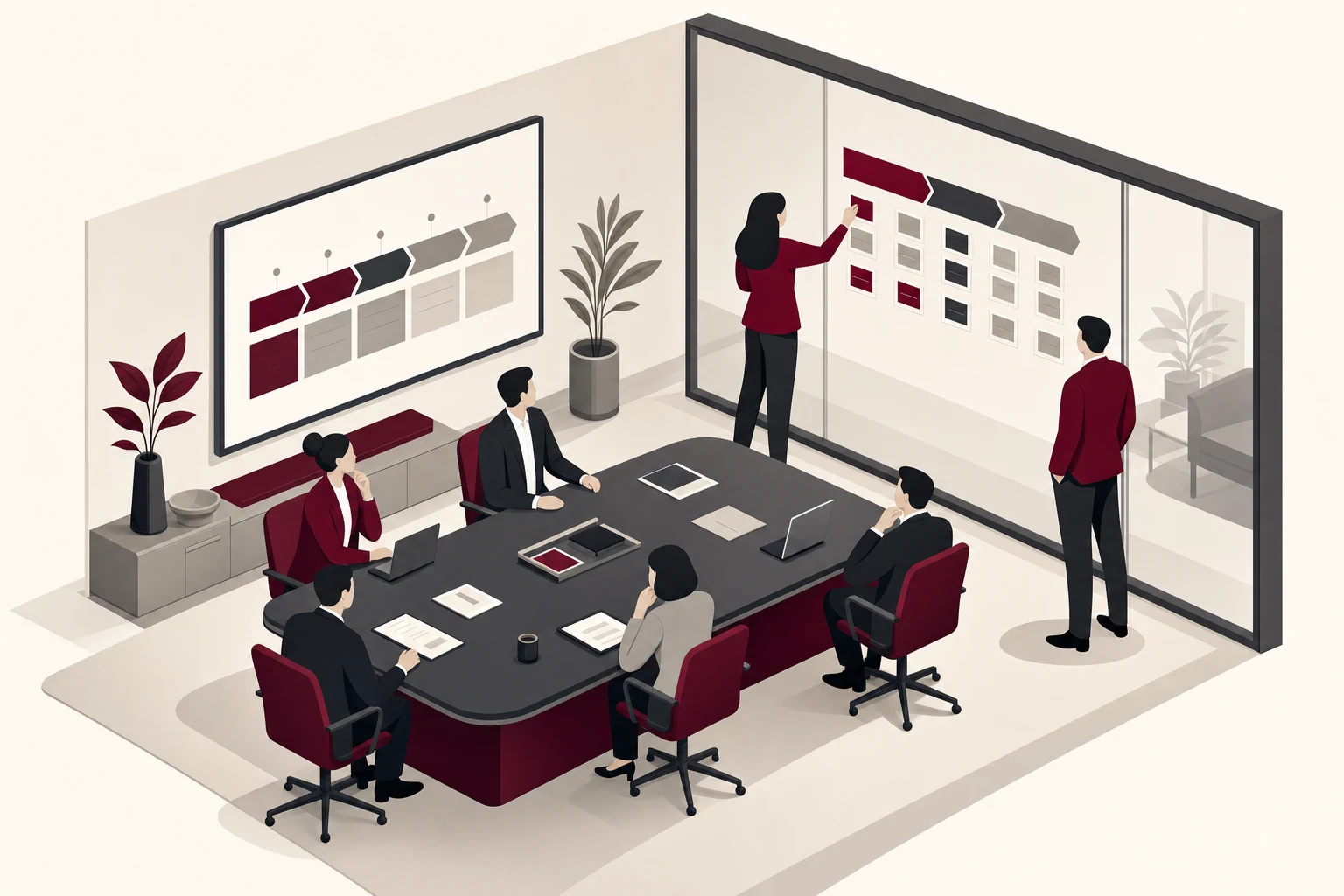
A readiness assessment is deliberately unglamorous work done in the cheapest possible order. It establishes what is true about your data, systems, governance and people before a commitment is made, so that the sequence you fund is one that can actually complete.
The framework
Maturity is assessed per dimension, not as a single company-wide score — it is entirely normal to be operational on knowledge access and ad hoc on governance. Select a level to see what it looks like from the inside.
Level 01 · Curiosity
Individuals experiment with public AI tools. Nothing is documented, nothing is governed, and no one owns the outcome.
What we typically see
The next move
Establish an acceptable-use position and inventory what is already in use before restricting anything.
Level 02 · Pilots
Departments run isolated pilots that demo well. They stall at the point where they would need production data or a real owner.
What we typically see
The next move
Score the pilot portfolio on value against effort and kill the ones that cannot reach production.
Level 03 · In production
At least one AI capability serves a real workflow, with named ownership and a defined review point when it behaves unexpectedly.
What we typically see
The next move
Formalise the governance you are already doing informally, then extend the pattern to the next workflow.
Level 04 · Platform
AI capability sits on shared foundations — one identity model, one permission model, one audit trail — rather than being rebuilt per department.
What we typically see
The next move
Shift the conversation from individual use cases to platform economics and portfolio prioritisation.
Level 05 · Assured
AI is a governed operating capability: risk-classified, evidenced, measured against business outcomes and defensible to an auditor or a ministry.
What we typically see
The next move
Maintain the assurance posture and use it commercially — in tenders, in due diligence, with regulators.
What we assess
Does an AI initiative have a business owner who carries the outcome, or only a sponsor who approved the budget?
Can the data an AI capability would depend on be trusted, accessed and permissioned without a project of its own?
Can systems expose what an AI capability needs to read and write, or would every integration be bespoke?
Where must a human stay in the loop, what may an AI feature never decide alone, and how would you evidence that later?
Do your deployment options actually satisfy the data-residency and sovereignty constraints you operate under?
Whose day changes, who has to be brought along, and who currently has the skills to run what you are proposing?
Current vs future state
Agreement on the current state is usually the hardest part of the engagement, and the most valuable output of it.
| Area | Where most organisations are | Where the roadmap takes them |
|---|---|---|
| Decision support | Reports compiled manually, disagreeing depending on who ran them | One agreed definition per measure, traceable to the transactions behind it |
| Knowledge access | Answers depend on asking the right colleague before they go on leave | Permission-aware retrieval over approved sources, cited back to the document |
| Routine processing | Skilled staff re-keying between systems that do not talk to each other | Assisted preparation with a human approving the consequential step |
| Governance | AI use is unmapped, so risk is unquantified and unevidenced | Risk-classified use cases with an audit trail produced as a by-product |
| Cost visibility | Departmental AI subscriptions invisible to finance | Central cost and usage visibility against a prioritised portfolio |
The scorecard
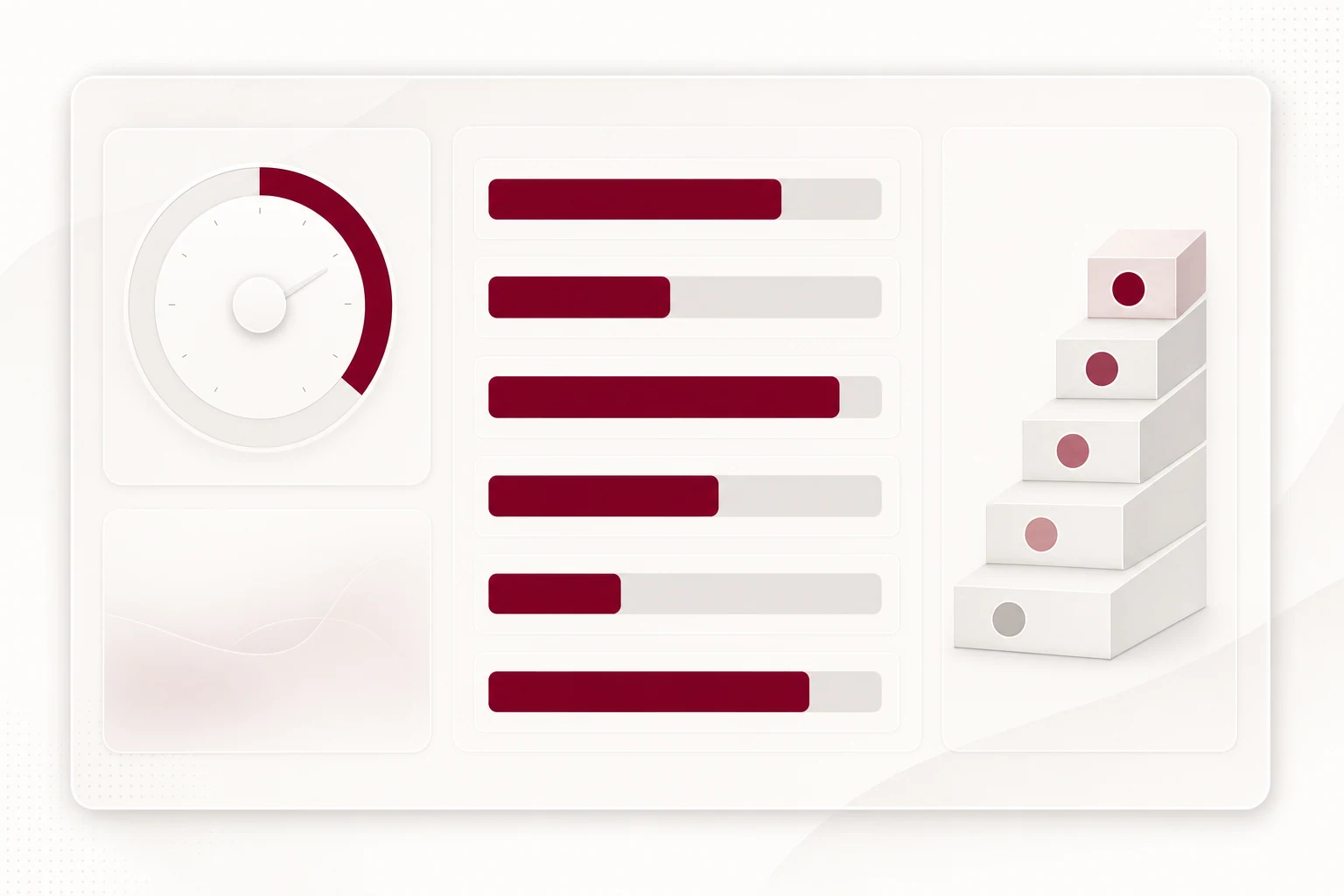
Each dimension carries a level, the evidence behind that level, and the specific gap that holds it back. There is no composite vanity number, because a single score invites the wrong conversation — the useful discussion is always about the weakest dimension.
Scores are agreed with you in the readout, not delivered as a verdict. Where we disagree with a process owner about a level, that disagreement is recorded rather than resolved by us.
Deliverables
Yours to take to any vendor, including one that is not us. The engagement is priced as advisory work, not as a route into an implementation contract.
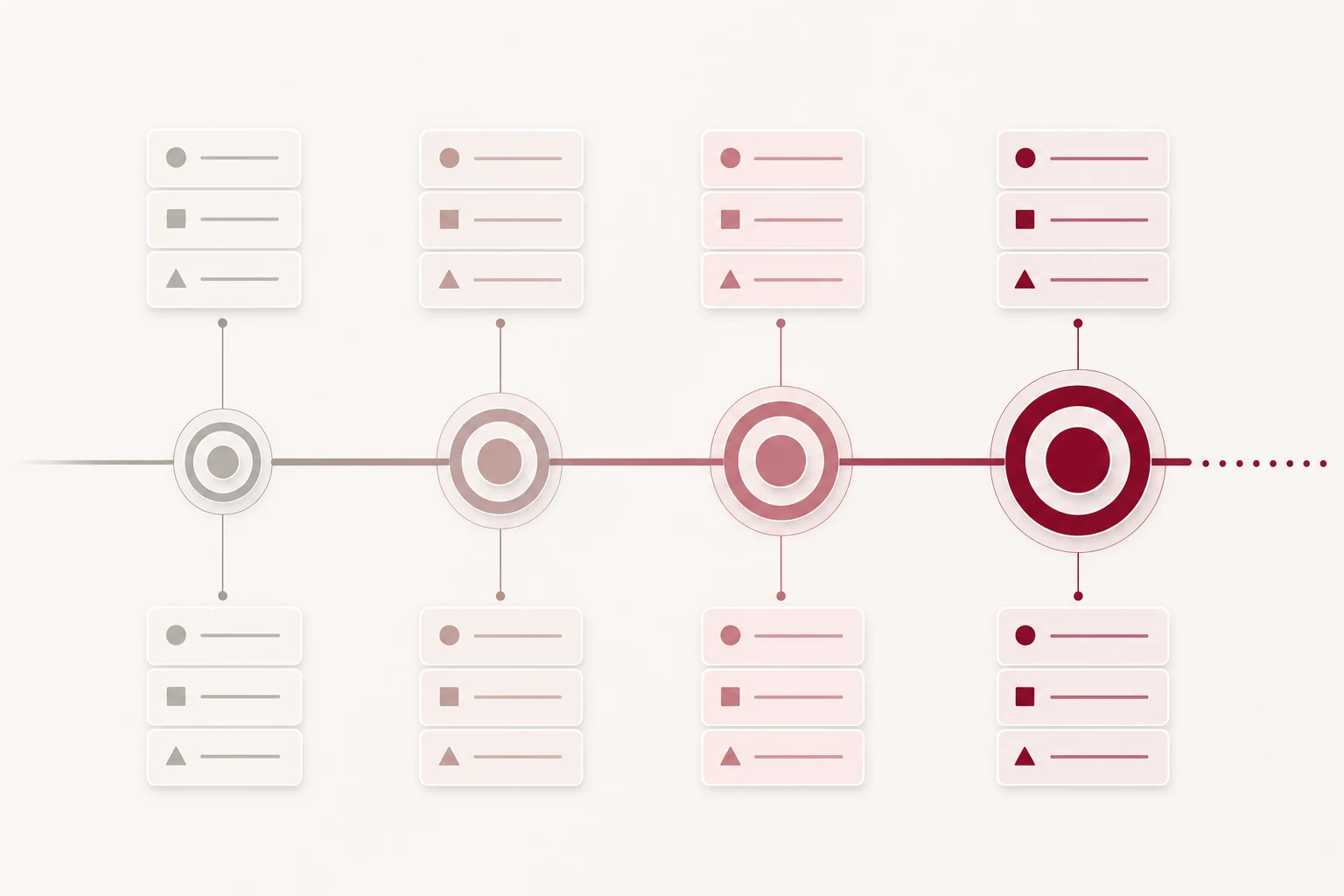
Your position on the five-level ladder per dimension, with the evidence behind each score and the gaps stated plainly — including where the honest answer is "not yet".
Candidate use cases scored on business value against implementation effort, each with its data dependencies and a build, buy or defer recommendation.
A phased plan with dependencies made explicit — what must land first, what can run in parallel, what waits — and a named owner per phase.
Human-in-the-loop points, approval boundaries, acceptable-use position and the audit-trail requirements needed to evidence all of it later.
Cost, the assumptions behind it, the measures that will tell you whether it worked, and the review checkpoints where you can stop.
A leadership session that walks the findings, the recommendation and the trade-offs — and answers the question the board will ask.
Business outcomes
Stated as outcomes rather than percentages. We do not publish figures from other clients' programmes as if they were a forecast for yours.
Sequencing removes the stall points before they consume a budget cycle.
Value-versus-effort scoring puts money behind the defensible cases, not the loudest ones.
Guardrails and evidence requirements are defined up front rather than retrofitted under audit.
Shared foundations mean the second use case costs a fraction of the first.
Industries
A ministry's residency constraints and a distributor's margin pressure lead to different roadmaps from the same maturity score.
FAQ
A proof of concept answers "can this technology work?". This answers "should we fund it, in what order, and what has to be true first?". The output is a set of decisions and documents you own, not a demo environment that expires. We would like to build what follows, but the engagement is not structured to require it.
Then we say so, and the roadmap starts with foundations — process documentation, data remediation, integration groundwork — instead of a model. That answer has saved clients considerably more than the engagement fee, and it is the reason the assessment is scoped and priced separately from any build.
Expect a half-day workshop with leadership, then roughly two to three hours each from the process owners in scope, plus access to sample data and system documentation. We work around operational schedules and can run sessions across your sites.
No. Where our platform genuinely fits we will say so and explain why; where an off-the-shelf product or your existing stack is the better answer, we will say that instead. The scoring criteria are shared with you, so you can check the reasoning rather than take it on trust.
The guardrails deliverable covers acceptable use, human-in-the-loop boundaries and audit-trail requirements, which addresses most tender questions. For a full ISO/IEC 42001-aligned management system, pair this with our Cybersecurity & AI Governance engagement.
Yes — it is one of the six dimensions. We assess whether your deployment options actually satisfy the residency constraints you operate under, including on-premises and hybrid hosting of models where that is the requirement.
Get started
A short conversation is usually enough to tell whether you need the full six-dimension assessment or just a second opinion on a decision you have already taken.
Chat with us on WhatsApp
Pick the team you need — we'll open the chat.
Ask Teky Bot
AI-assisted · replies may contain mistakes
Please don't share passwords or personal data. AI processes your messages. See our Privacy Policy.
We set no cookies of our own and run no trackers — just two on-device preferences (theme, this notice). The Google Map on our Contact page can set Google's. Details in our Cookie Policy and Privacy Policy.